Tuesday, December 7, 2010

Exasperation Loves Company

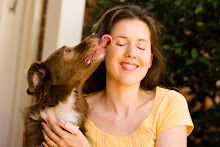
Earlier tonight, I told my client that it will make me happy just to know that, somewhere out there, another lady is being driven crazy by a dog who is every bit as big, strong, crazy, goofy, hyper and eager as Bagel!!

Tuesday, April 27, 2010

You know you're a dog lover...

If you consider your hands to be clean after they’ve been licked and wiped on fur

If all of your coat pockets smell like Snausages

If you've given up on lint rollers and just buy clothes to match your dog

If you’ve ever discussed anal glands with a stranger

If all of your shoes are stored above eye-level

If you've ever reached into your pocket for cash and come out with poop bags

If more than half of your living room is taken up by a crate and pen

If you’ve ever stolen the plastic bag off your neighbor’s newspaper because you were caught unprepared

If your kitchen floor is squeaky clean but a little sticky

If it's a pretty good day when the worst thing that gets on you is pee pee

If you’ve ever had to pull something out of your dog’s business end

If you’ve met more of your neighbors since getting a dog than you had met in the previous ten years

If you’ve ever spotted a missing (and frighteningly large) household item in your dog’s poop

If you know that your dog doesn't like to be hugged, but you still can't stop yourself

If you secretly suspect dog has trained you to fetch

If your dog has a more elaborate car safety system than you had as a child

If you’ve ever smiled at an attractive stranger while holding a bag of #2

If you think you might actually be qualified to be a veterinarian at this point

If you’ve ever walked around the block in your pajamas

If you’ve ever gotten rained on because SOMEONE can't go potty without the umbrella over her

If you’ve ever had your fingers three knuckles deep in your dog's throat to stop him from swallowing something he shouldn't

If you don't even notice the slobber any more

If you’ve ever debated with your spouse over whether it’s safe to let your dog eat mulch

If you’ve made more trips to the emergency vet than the emergency room

If you own more Kongs than dinner plates

If the idea of getting pet health insurance has stopped seeming absurd

If you can clean your dog’s ears, brush her teeth and apply frontline in less time than it takes to toast a bagel...

You know you're a dog lover.

Copyright 2010 Hilary Bolea

Wednesday, April 7, 2010

Words Get in the Way

"Language is the source of misunderstandings." - Antoine de Saint-Exupery (1900 - 1944)

I just saw this quote for the first time and I love it! It captures so much about the relationships between humans and their dogs, and our efforts to communicate.

Dogs don't use language, and they never have misunderstandings. They communicate with their bodies: eyes, mouth, tail, breathing, muscle tension and posture. There is no filter, no spin, just to
tal honesty.

People, on the other hand, decide what we want other people to know and communicate it verbally, while often unknowingly communicating the truth with our bodies. For a vivid and sad illustration of this, watch Sandra Bullock's acceptance speech at the Golden Globes with the sound muted, and then watch her Oscar acceptance speech, given just a few weeks later, also with the volume down. There is no question that her life, and her emotional state had changed profoundly in the weeks between the two speeches, although she does not acknowledge it in her words.

More often than not, the language, concepts and symbols filling up our heads muddy up our attempts to communicate with our dogs. Here are a few scenarios I see a lot:
  • An owner saying, "Good boy! Good boy!" while petting and rubbing around the dog's head, ears and face. The dog is trying to dodge the petting, clearly irritated, but because the owner is saying "Good boy!" the owner fails to notice.
  • People getting frustrated and repeating a command, like, "Sit! Sit! Sit!" when it's not working, because the dog "knows what it means," and the dog "should" sit. This scenario is at the heart of a cardinal rule of behavioral conditioning: "If it's not working, do something different." (I once read about a psychology experiment where both humans and lab rats were taught to navigate a maze to a certain spot and find a reward. Halfway through the trials, the location of the reward changed, unbeknownst to the subjects. The lab rats were able to adapt and find the reward in the new location; the humans were not. "It should be where it was before!" "He should sit !")
  • Owners saying, "She knows it's wrong!" -- as thought we share a common moral code -- when their dog exhibits appeasement behaviors like a lowered head, and a tail between the legs. Another one along these lines is, "Why should I give her a treat for doing what she ought to do?"
  • Owners relating to their adult animals as though they are human children or babies. We are all susceptible to this to some extent, because our brains like to file things into the cubby holes of our concepts, and our concept for small, warm, cute thing is "child". Baby talk and cooing work well for kids, but not so well for animals. Here's an example that really rankles for some reason. http://www.youtube.com/watch?v=zXjPQYgT25Q (For the record, I do think the hedgehog is very cute, but the way the people talk to him drives me crazy!)
If you want to have fewer "misunderstandings" with your dog, try interacting in total silence. You'll be surprised at how good your instincts are when you get the words out of the way.

Friday, March 26, 2010

My Favorite Dog Training Tips


  • For a teething puppy, put a bag of (full-length) carrots in the freezer. They love to chew on them, and the cold soothes their gums.
  • If you walk your dog on an extendable leash, give your dog a cue each time before you hit the lock button. Your dog will quickly learn to stop when he hears the cue, before the leash locks up, and avoid getting a jerk on his neck. For Bagel, I say, "Lock down!" before I lock, and "Free!" before I release.
  • If you can't let your dog of the leash because she won't come when called, get a 30 foot cotton lead, and attach it to a chest harness. This way she'll feel like she's running free, but you'll have a backup plan, and a 30 foot head start. Just remember to tie knots every few feet on the lead, so you don't burn your hand if you grab it.
  • Stuff a kong with wet dog food and freeze. Then submerge the frozen kong in a tupperware filled with water, and freeze that. Now you have a time-release treat for your dog! As the water melts your dog will have a cold drink, and in a few hours, he'll be able to get the kong out.
  • For dogs who love to shred: stuff a kong, and then put it in a toothpaste box. Put that in a cereal box. Put that in a paper bag. Stuff that into a larger box. Hand it over, and watch the paper fly! It can keep your dog busy for a good 30 minutes, and it only takes 30 seconds to sweep it up.
  • Every time your dog goes #1 outside, say "Potty!" Every time she goes #2, say "Poo poo!" This creates the strongest possible association between the word and the behavior. That way, when you need your dog to go in a hurry, you can say the word, and she'll know exactly what to do.
  • If your dog doesn't catch balls on the fly, but you're sure that he could, you can teach him. Start with a very light object, like a tissue, that will fall very slowly. First, just hand it to your dog, and give him a click and a treat if he takes it in his mouth. Once he has that part down, drop it from just an inch or two higher. If he snatches it out of the air, click and treat. Once he can do that, slowly advance through heavier objects, like a crumpled paper towel, a wash cloth, a stuffed animal, and then a ball.
  • If your dog has food allergies or a sensitive stomach, you can use wet hypoallergenic dog food as a training reward. Just put it in a squeeze tube.
  • When you're house training your dog, hang a chart on your fridge, where everyone in the house can record when your dog has an accident: date, time, where in the house, when was the dog out last, where were the people, and what the dog was doing just before the accident. You'll be surprised at how quickly trends become apparent.
  • Don't have your clicker on you? Say "click" instead!

Monday, December 14, 2009

Knowing what your dog likes and what you like

Dog trainers are in the business of positive reinforcement, but it's very easy to confuse what's enjoyable for you with what is enjoyable for your dog. The most common examples I see among my clients are hugs. I've seen countless owners cozy up with their dogs by grabbing them around the shoulders and giving playful rubs on their cheeks and ears. The dog looks miserable and wriggles away; the owner gives a hearty laugh and pats the retreating dog on the rump. The whole thing reminds me of a grandpa pinching his grandson's cheeks too hard, never realizing that the experience is not actually enjoyable to the child.

It's not that you should never do the things you like that your dog doesn't, but you want to be aware of whom you are gratifying at any given time. And if you're trying to provide positive reinforcement for good behavior, make sure the reinforcer is something your dog actually likes. (Another classic example: the dog owner gives the dog a treat and a pat on the head. The dog takes the treat, but dodges the pat on the head, looking annoyed. What the owner has accomplished is reward AND punishment - not the best way to get the behavior you want!)

So I am starting a list of things that I like, and another list of things that Bagel likes.

Things that are enjoyable for ME:

  • Hugging Bagel
  • Cuddling with Bagel
  • Kissing Bagel's face and ears
  • Petting his soft head
  • Smelling his ears
Things that are enjoyable for BAGEL:

  • Playing tug
  • Being chased for his toy
  • Running
  • Being stalked
  • Belly rubs


Monday, October 26, 2009

What Bagel is looking for when he looks back at me

The first time my father-in-law met Bagel, he remarked on how Bagel would only roam 50 feet or so out in front of us, and then stop, turn and look at us, as though to say, "Am I still going the right way?" In the past, when Bagel has done this, I have always smiled at him and said something reassuring (to me, anyway), like, "It's okay, Bagel," and gestured down the path, as though I were urging him onward. But, my smiling words always seemed to confuse him -- he had an expression of irritation, as though he wasn't getting what he wanted from me.

Today, I was walking with Bagel in the woods, and he was doing the same thing -- heading out about 50 feet in front of me, and pausing to stare back at me. I started to wonder if maybe he wasn't looking for verbal reassurance and a smile, but was actually searching my eyes for information on where our pack-of-two was headed next. If that were the case, it would probably make more sense to him if I looked in the direction I wanted him to go, rather than looking at him.

So I decided to try it out. The next time Bagel looked back at me, I stared straight past him and kept walking straight ahead, with a sense of purpose. It worked like a charm. With the briefest of glances at my face, Bagel seemed to get the information he was looking for, and continued running ahead of me in the same direction.

Aha! I was onto something! Once I knew that, I couldn't resist experimenting a little. The next time Bagel looked back at me, I continued looking straight ahead, but I stopped in my tracks and tensed up. Bagel stopped in his tracks and stared dead ahead. Not seeing what was concerning me (because there wasn't anything), he ran back to me and stood behind me, allowing me to be the first to face the mystery-threat. Wow! Hidden powers!

After we had continued and Bagel had resumed his place out in front, I tried stopping abruptly and looking sideways into the woods. He got quite a bit ahead of me before he realized that I had stopped, but once he did, he stopped immediately and followed my gaze into the woods. Not seeing what I was fixated on, he ran back to me and stood behind me again... with no command, no urging, and no reinforcement from me whatsoever. He was obeying his own law.

The next time, I didn't want Bagel to get so far ahead of me before he stopped, so I decided to try something I read in Watership Down when I was eleven -- I thumped my foot on the ground a few times as a warning signal, and fixed my gaze into the woods on the right. This time, Bagel responded immediately, bolting back to my side. (I'm not really sure why; as far as I know, dogs don't thump their feet in warning like rabbits. But if it works, hey, go with it.)

Last came the acid test. I saw people up ahead in the woods and decided to try my new technique again, in what would be a very difficult situation for Bagel. (Bear in mind that Bagel is possibly the most enthusiastic greeter this side of a Disney parade. Every person we encounter is a cherished idol he has always dreamed of meeting.) He was only about 20 feet from his new best friends -- and I was a distant and fading memory -- but when I did my warning stomps and stared into the woods, Bagel sprinted back to me and hid behind me as he waited for my decision on how we would react to whatever I saw in the woods.

I'm excited about this discovery. Not only has it cleared up what Bagel needs from me when he glances back at me, but it has given me a valuable new way to communicate with him in his own language.

P.S. As a side note, this confirms what I have felt to be true for a long time -- that Bagel still regards me as the "pack leader" even when he walking ahead of me. He's still following my cues and looking to me for direction. It's important not to reduce dog behavior to dominance and submission -- it's not always a black-and-white thing.

Sunday, October 11, 2009

Jane Goodall and the Tricky Chimp


I am reading Jane Goodall's magnificent book In the Shadow of Man, where she first shared with the world her experience of living among chimpanzees in the jungles of eastern Africa. The book is full of fascinating stories that show the chimps to be capable of much higher levels of thought than I ever imagined. One such story was about a clever youngster that Jane called Figan.

Jane had set up a feeding station in the forest where she would leave bananas, and hide nearby to observe the chimps' interactions. (I want that job.) More often than not, the adult males would hog all of the bananas, and the females and youngsters would leave empty-handed. So she started hiding the odd banana here and there up in trees so that the females and juveniles could find them while the adult males were feasting at the main feeding station.

Jane first discovered that a toddler chimp named Figan was a little rascal when she saw him spot a banana she had hidden in a tree, and then deliberately avoid sitting near it or looking at it. Evidently, chimps are very attuned to one another's eye movements, and if Figan had looked at the banana, he would have drawn the attention of one of the adults, who would have taken it. Instead, Figan patiently waited until they had left, and then he snatched it for himself.

But that fake-out was only the beginning of Figan's antics. One day, as Jane sat watching the chimps at the feeding station, Figan stood up and marched purposefully into the forest. The adult chimps got up and followed him -- as chimps evidently do, when one gets up and walks off -- leaving the bananas behind. A few minutes later, Figan returned, unencumbered by the adults, and had all the bananas to himself!

Jane said that this first occurrence may have been a lucky coincidence, but in the coming days, Figan repeated it again and again -- leading the adults away from the bananas, and coming back for a solitary feast. As skeptical as I am of attributing human motives to animal behavior, it's hard not to see this as a kind of trickery.

After Figan had used this ploy several times, one day he returned alone to the bananas only to discover that someone had beaten him to the punch. An adult male was guarding and eating the bananas, and Figan couldn't even get close. Figan screamed and beat the earth with his fists, jumped up and down, and in all other ways threw a classic temper tantrum.

This is fascinating to me because Figan was so much more upset by being deprived of bananas when his plan failed than he was when the adults were guarding the bananas to begin with. He could tolerate not getting any food during the group meal because it was normal - adults eat first. But when the same reality presented itself as his plot gone awry, it was unbearable. To me, this speaks to Figan's ability to make plans and project outcomes, and to compare the projected outcome with the actual outcome. (The best laid plans of mice and men, young Figan.)

I can't think of any other animal I've ever worked with who could manage anything close to that level of cognition. When Bagel wants our dinners, he telegraphs it loud and clear, with whines and stares. When we get up to go to the kitchen, he instantly moves in, reminding us to move our plates to higher ground. If he could feign disinterest, he would have a much better chance at a free buffet. Or, if like Figan, he could deliberately create a distraction -- suddenly barking at a closet door, for example -- we would probably take the bait and have a look inside, while he enjoyed our dinners. Alas, poor Bagel, you are as transparent as the water in your bowl, but I love you for it.